
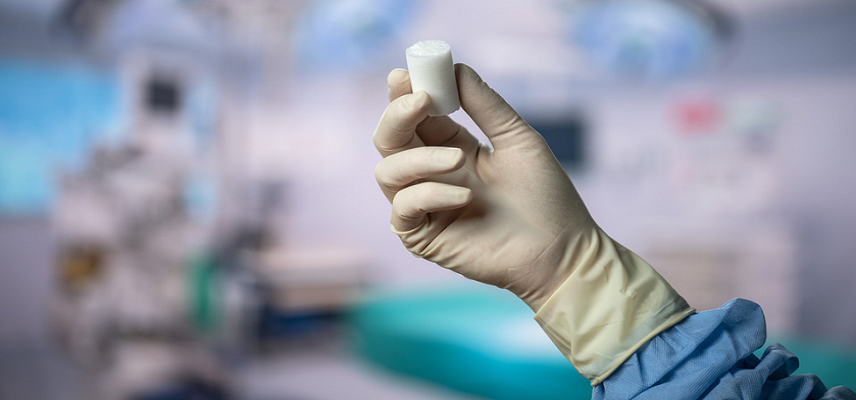
Miach Orthopaedics has secured FDA 510(k) clearance for updated labelling of its BEAR Implant, marking a first in sports medicine.
The label now includes a claim for reduced risk of post-traumatic osteoarthritis (PTOA) compared with ACL reconstruction using hamstring tendon autograft.
Why This Matters in ACL Treatment?
PTOA is a long-term complication following ACL injury. Key realities clinicians face today:
- Up to 50% of ACL reconstruction patients develop symptomatic PTOA
- Symptoms worsen over time
- There is no cure, short of total knee replacement
Until now, PTOA was treated as an unavoidable tradeoff.
What the FDA Label Update Covers?
The updated claim applies to:
- Patients aged 14 and older
- ACL injuries with concomitant knee damage, such as meniscus tears
- A six-year post-surgery timeframe
This is the first FDA-cleared sports medicine label to address PTOA risk reduction.
Clinical Evidence Behind the Claim
The decision is based on six-year pooled data from the BEAR I and BEAR II studies.
Key findings:
- ACL reconstruction patients had 6× higher PTOA rates
- BEAR Implant reduced PTOA by 27.7%
- Results were statistically significant (p = 0.002)
PTOA was defined as Kellgren–Lawrence grade 2 or higher on imaging.
Why BEAR Is Different from ACL Reconstruction?
Traditional ACL reconstruction:
- Removes a healthy tendon from the leg
- Creates a second surgical wound
- Replaces the ACL instead of healing it
The BEAR Implant takes a different approach.
How the BEAR Implant Works
The BEAR Implant is a collagen-based scaffold that enables ACL healing.
Procedure highlights:
- Implant bridges the torn ACL ends
- Surgeon injects the patient’s own blood
- Native ACL attachments are preserved
- Implant naturally resorbs as healing occurs
This allows the body to heal its own ACL, not replace it.
Expert Perspective
Orthopaedic surgeons now have data to discuss long-term knee health, not just short-term stability. Gregory DiFelice, MD, notes this shifts ACL decision-making beyond return-to-play timelines. Patrick McBrayer, CEO of Miach, calls it a new bar for ACL outcomes, backed by Level 1 evidence.
Regulatory and Indication Snapshot
- De Novo FDA approval: December 2020
- Indication: Complete or partial ACL rupture
- Requirements: ACL stump attached to tibia
- Paediatric use: Permitted with growth plate safeguards
Bottom Line
The BEAR Implant reframes ACL treatment from reconstruction to restoration. With FDA-cleared evidence showing lower osteoarthritis risk, it challenges decades of accepted tradeoffs in knee surgery. For patients, this is about more than recovery. It’s about protecting knee health years after the injury.