
GLP-1 Receptor Agonists Linked to Reduced Asthma Exacerbations in Overweight and Obese Adults Without Diabetes
New real-world research presented at the AAAAI Annual Meeting suggests that glucagon-like peptide-1 receptor agonists (GLP-1 RAs) may significantly reduce asthma exacerbations in overweight and obese adults without diabetes — pointing to a potential new therapeutic strategy for a difficult-to-treat population.
The findings were presented by investigators affiliated with the American Academy of Allergy, Asthma & Immunology and published in an online supplement of the Journal of Allergy and Clinical Immunology.
Study Design
Researchers conducted a retrospective cohort study using the TriNetX global health research network.
The study included non-diabetic patients with asthma across three BMI categories:
- Overweight (BMI 25.00–29.99 kg/m²)
- Obese (BMI 30.00–40.00 kg/m²)
- Morbidly obese (BMI ≥40.00 kg/m²)
Patients initiating a GLP-1 receptor agonist were compared with matched controls without GLP-1 exposure over a three-year follow-up period. Propensity score matching was used to balance baseline characteristics.
Key Results
After matching:
Overweight cohort (n=710)
- Risk ratio: 0.748
- Absolute risk reduction: 14.6%
Obese cohort (n=1,515)
- Risk ratio: 0.790
- Absolute risk reduction: 12.2%
Morbidly obese cohort (n=1,249)
- Risk ratio: 0.780
- Absolute risk reduction: 13.3%
Across all BMI categories, GLP-1 initiation was associated with a meaningful reduction in asthma exacerbation risk.
Clinical Context
Asthma in patients with obesity is often characterized by:
- More severe symptoms
- Reduced response to inhaled corticosteroids
- Increased exacerbation frequency
Weight loss has been associated with improved asthma control, but pharmacologic options specifically targeting obesity-related asthma are limited.
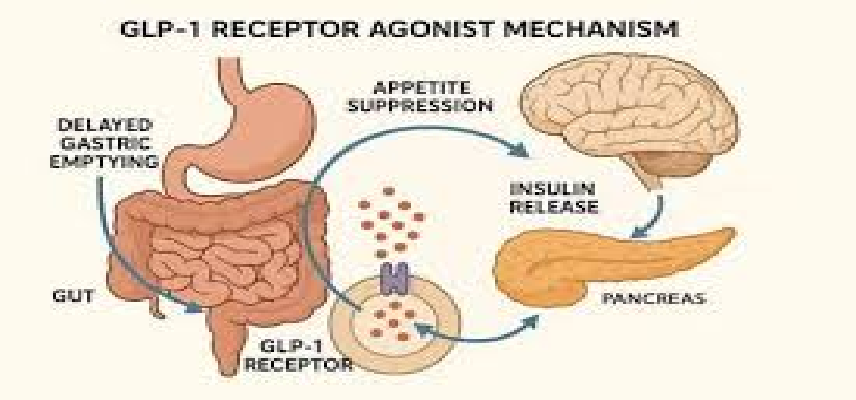
By examining GLP-1 use in non-diabetic patients, this study suggests benefits that may extend beyond glucose regulation.
Potential Mechanisms
Several mechanisms may explain the association:
- Weight reduction leading to improved lung mechanics
- Reduced systemic inflammation
- Possible direct immunomodulatory effects of GLP-1 signaling
However, the observational design means causality cannot be established.
Strategic Implications
If validated in prospective randomized trials, GLP-1 receptor agonists could:
- Represent an adjunctive strategy in obesity-associated asthma
- Expand the therapeutic footprint of GLP-1s beyond metabolic disease
- Influence treatment guidelines in high-BMI asthma populations
Given the rapid adoption of GLP-1 therapies globally, further investigation into respiratory benefits could have significant clinical and commercial implications.
Bottom Line
This study provides compelling early evidence that GLP-1 receptor agonists may reduce asthma exacerbations in overweight and obese patients without diabetes.
The next critical step will be controlled clinical trials to confirm whether the observed associations translate into a reproducible, disease-modifying benefit.

Optimize Your trial insights with Clival Database.
Are you exhausted from the uncertainty of trial insights pricing? Clival Database ensures the clarity in the midst of the global scenario for clinical trials to you.Clival Database is one of the best databases that offers an outstanding number of clinical trial data in terms of 50,000+ molecules and from primary regulatory markets as well as new entrants like Indian and Chinese markets.
With Clival, you get accurate positioning of historical sales data, patent database, company profiling, safety & efficacy, and prediction of launch of new innovative molecules helping you to align your research and driving down the cost.
To add value, we further break down our analytics for you so that improving your operational effectiveness; optimizing your clinical trials; and offering you accurate and high-quality data at lowest possible prices becomes possible.
Elevate your trial success rate with the cutting-edge insights from Clival database.
Check it out today and make more informed sourcing decisions! Learn More!