
Overview
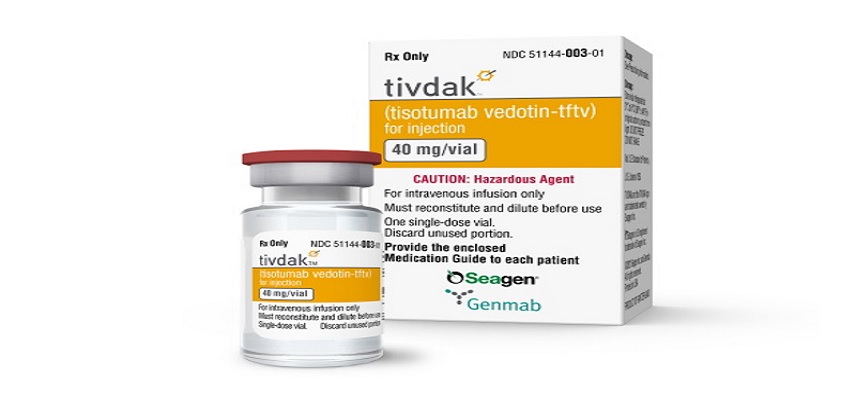
The US Food and Drug Administration has granted full approval for Seagen Inc.'s Tivdak (tisotumab vedotin), which is targeting tissue factor (TF) for the treatment of patients with recurrent or metastatic cervical cancer who have progressed on or after chemotherapy. This marks a significant advancement in the therapeutic landscape for cervical cancer, highlighting the potential of antibody-drug conjugates (ADCs) in oncology.
Tivdak
Tivdak is an antibody-drug conjugates drug that targets tissue factor, combining Genmab's tissue factor-targeting monoclonal antibody tisotumab with Seagen's antibody-drug conjugates technology, which is designed to target tissue factor antigens on cancer cells and deliver the cytotoxic payload MMAE directly into cancer cells.
Tissue Factor Pathway
- Tissue factor is known to be involved in tumor signaling and angiogenesis pathways and overexpressed in the vast majority of patients with cervical cancer and in many other solid tumors.
- Its ability to internalize rapidly when bound by antibodies and the minimal impact on normal coagulation processes further enhance its suitability for targeted cancer therapies.
Tivdak: Indiations
- Tivdak is indicated for the treatment of adult patients with recurrent or metastatic cervical cancer with disease progression on or after chemotherapy.
- This indication is approved under accelerated approval based on tumor response rate and durability of response.
- Continued approval for this indication may be contingent upon verification and description of clinical benefit in confirmatory trials.
Changes Post Tivadak & Precuations
- Tivdak caused changes in the corneal epithelium and conjunctiva resulting in changes in vision, including severe vision loss, and corneal ulceration.
- Conduct an ophthalmic exam at baseline, prior to each dose, and as clinically indicated. Adhere to premedication and required eye care before, during, and after infusion.
- Withhold Tivdak until improvement and resume, reduce the dose, or permanently discontinue, based on severity.
Cervical Cancer: Epidemiology
- Cervical cancer is the fourth most frequent cancer in women. It is diagnosed in approximately 570,000 women worldwide every year.
- Invasive CC is responsible for about 342,000 deaths annually from 2007 to 2016, the death rate decreased by about 1% per year in women over 50 years old but was stable in women under 50 years old.
- The mortality is different across various countries, from less than 2 per 100,000 in Australia and New Zealand to more than 22 per 100,000 in some African countries.
- Therefore, cervical neoplasm still represents a health concern worldwide, particularly in developing countries where screening programmes with Papanicolaou test and vaccination campaigns are not widely available.