
Novartis HARBOR Study of Del-desiran Misses Primary Endpoint in Myotonic Dystrophy Type 1
Phase III Study Does Not Show Statistically Significant Improvement on Primary Endpoint
Novartis has announced that its global Phase III HARBOR study evaluating del-desiran in people living with myotonic dystrophy type 1 (DM1) did not achieve its primary endpoint.
The study did not show a statistically significant improvement compared with placebo in video hand opening time, or vHOT. This measure was used to assess hand myotonia, one of the movement problems associated with DM1.
Although the primary endpoint was not met, Novartis reported evidence of clinical activity in some secondary endpoints and exploratory analyses.
The company is now reviewing the complete HARBOR dataset and plans to discuss the results with health authorities to determine the next steps for the del-desiran development program.
What Is Myotonic Dystrophy Type 1?
Myotonic dystrophy type 1 is a progressive neuromuscular disease that can affect several parts of the body.
The disease is caused by an expansion of CTG repeats in the DMPK gene. This genetic change can interfere with normal muscle and cellular functions.
People with DM1 can experience different symptoms depending on the individual. Common problems include myotonia, muscle weakness and reduced hand function.
These symptoms can make everyday activities harder. Simple tasks that require opening and closing the hands, walking or maintaining muscle strength may become difficult over time.
DM1 can also affect other body systems, making it a complex disease to treat.
Why Hand Function Matters in DM1
Hand problems are an important part of DM1 for many patients.
Myotonia causes muscles to have difficulty relaxing after they contract. For someone with DM1, this can make it harder to release an object, open the hand quickly or perform other routine movements.
The HARBOR study used video hand opening time as its primary measure.
The vHOT test looks at how quickly a person can open their hand after making a fist. A shorter opening time indicates better hand function and less myotonia.
Novartis selected this measure to evaluate whether del-desiran could improve one of the specific functional problems associated with DM1.
HARBOR Study Included About 150 Participants
HARBOR is a global Phase III, randomized, double-blind, placebo-controlled clinical study.
The trial evaluated the efficacy and safety of del-desiran over 54 weeks in approximately 150 people living with DM1.
Participants were randomly assigned to receive either del-desiran or placebo.
Treatment was administered once every eight weeks.
The study was designed to look at several different aspects of DM1 rather than focusing only on hand function.
Primary Endpoint Was Not Statistically Significant
The main goal of the HARBOR study was to determine whether del-desiran could improve vHOT compared with placebo.
According to Novartis, the study did not demonstrate a statistically significant improvement on this primary endpoint.
This means the difference between the del-desiran and placebo groups did not meet the statistical threshold set for the study.
The result means the trial did not provide the level of evidence needed to establish a statistically significant benefit on its main measure.
However, Novartis said that evidence of clinical activity was observed in secondary endpoints and exploratory analyses.
The company has not yet provided the full dataset and is continuing to evaluate the results.
Secondary Measures Looked at Muscle Strength and Daily Activities
HARBOR included several secondary endpoints designed to assess other areas affected by DM1.
The study measured muscle strength using hand grip strength and the quantitative muscle testing total score.
Researchers also evaluated activities of daily living using the DM1-Activ assessment.
Mobility and physical function were assessed using the 10-meter walk/run test, also known as the 10mWRT.
These measures are important because DM1 can affect more than just one muscle group or one type of movement.
Novartis said the full results from these assessments are being reviewed.
What Is Del-desiran?
Del-desiran is an investigational antibody oligonucleotide conjugate, also known as an AOC therapy.
It is designed to target the underlying cause of DM1 rather than only treating individual symptoms.
The treatment combines two main components.
The first is a monoclonal antibody designed to target transferrin receptor 1, or TfR1. This receptor is found on muscle cells and can be used to help deliver therapeutic molecules into muscle tissue.
The second component is a small interfering RNA, or siRNA.
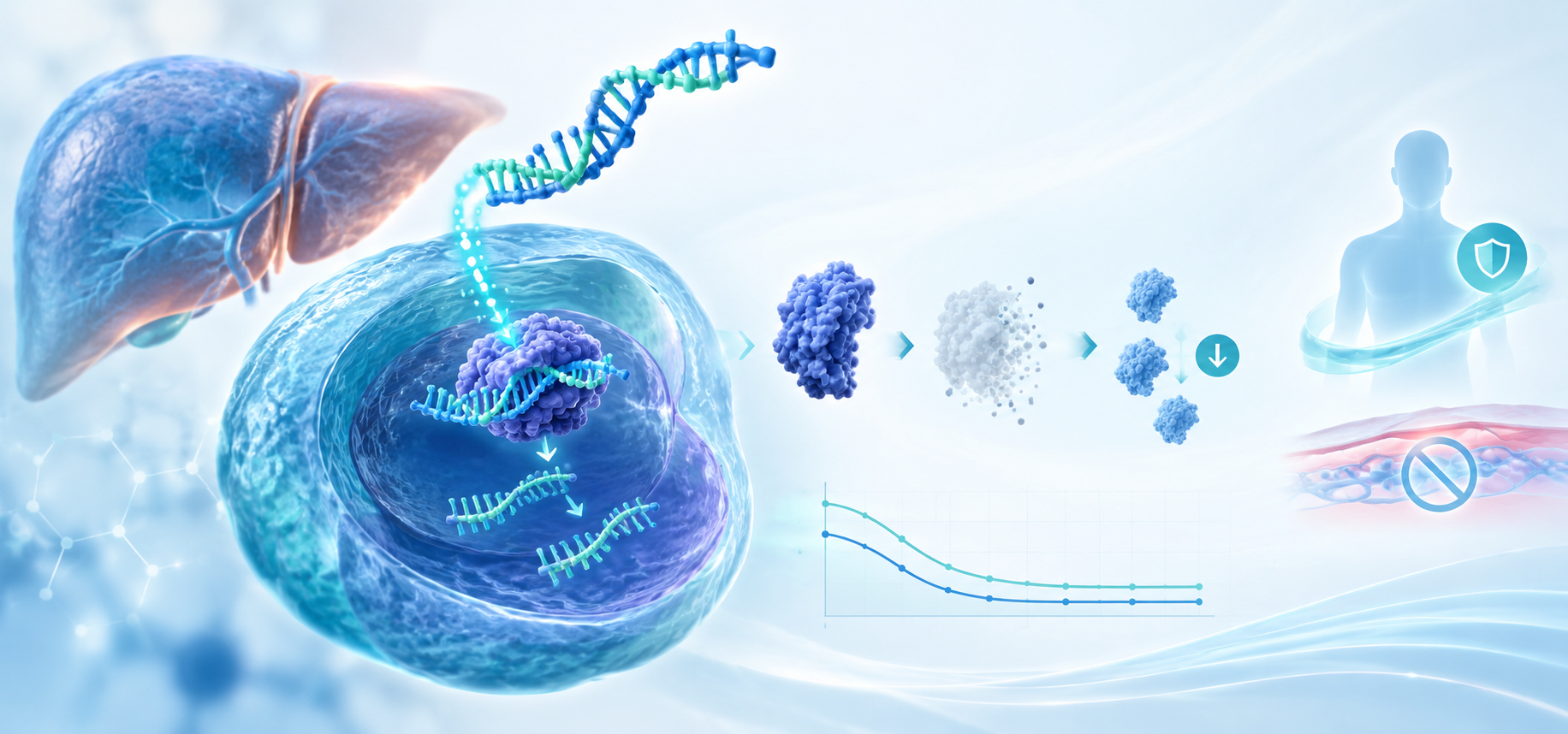
The siRNA is designed to trigger the breakdown of toxic DMPK messenger RNA.
The goal is to reduce the amount of disease-causing DMPK RNA inside cells and potentially address an important part of the biological process behind DM1.
Del-desiran Received Several FDA Designations
Before the Phase III HARBOR study, del-desiran received several regulatory designations in the United States.
The U.S. Food and Drug Administration granted the therapy Orphan Drug, Fast Track and Breakthrough Therapy designations.
Del-desiran also received Orphan Medicinal Product Designation in the European Union.
These designations are generally intended to support the development of potential treatments for serious diseases where treatment options may be limited.
DM1 currently has no approved treatment specifically designed to address the underlying genetic cause of the disease.
Safety Results Were Generally Consistent With Earlier Data
Novartis said the safety findings from HARBOR were generally consistent with previously reported data for del-desiran.
The company has not yet released the complete safety dataset from the Phase III study.
A full review of the safety and efficacy findings will be part of Novartis' evaluation of the HARBOR results.
The company will also discuss the data with regulatory authorities before deciding on the future development strategy for del-desiran.
Novartis Acquired Del-desiran Through Avidity Biosciences
Del-desiran is one of three antibody oligonucleotide conjugate therapies that became part of Novartis' neuromuscular pipeline following its acquisition of Avidity Biosciences.
The acquisition expanded Novartis' work in neuromuscular diseases and gave the company access to AOC technology.
The AOC approach is designed to combine the targeting ability of antibodies with genetic medicines such as siRNA.
This allows developers to explore ways of delivering RNA-based treatments to specific tissues, including skeletal muscle.
Novartis Is Also Developing Del-zota for Duchenne Muscular Dystrophy
Del-desiran is not the only AOC therapy being developed by Novartis.
The company is also advancing delpacibart zotadirsen, also known as del-zota, for Duchenne muscular dystrophy.
Del-zota is being studied in patients with DMD who have mutations that may be treated through exon 44 skipping.
Novartis has filed del-zota for accelerated approval in the United States, and the FDA has granted the application priority review designation.
The program is being developed separately from the del-desiran program in DM1.
Another AOC Program Is Being Developed for FSHD
Novartis is also working on delpacibart braxlosiran, or del-brax, for facioscapulohumeral muscular dystrophy (FSHD).
The company recently reported positive Phase I/II biomarker data for the program.
Novartis plans to meet with the FDA to discuss the next steps for del-brax.
This means the company continues to have multiple AOC programs in development even as it reviews the HARBOR results for del-desiran.
Novartis Will Review the Full HARBOR Dataset
The company has not announced that the del-desiran program is being discontinued.
Instead, Novartis said it is evaluating the full HARBOR dataset and will engage with health authorities.
The additional analysis will help the company understand the results across the primary, secondary and exploratory measures.
The discussions with regulators will also help determine what development options may remain for del-desiran.
Novartis Continues Its Focus on Neuromuscular Diseases
Novartis has been expanding its focus on neurology and neuromuscular conditions.
The company's neurology work includes established programs in spinal muscular atrophy and multiple sclerosis, along with research in neuroimmunology, neurodegeneration and neuromuscular diseases.
The company says its goal is to develop additional treatment options for people affected by serious neurological diseases.
For the del-desiran program, the next step will depend on the full analysis of the HARBOR Phase III data and discussions with health authorities.

Optimize Your trial insights with Clival Database.
Are you exhausted from the uncertainty of trial insights pricing? Clival Database ensures the clarity in the midst of the global scenario for clinical trials to you.Clival Database is one of the best databases that offers an outstanding number of clinical trial data in terms of 50,000+ molecules and from primary regulatory markets as well as new entrants like Indian and Chinese markets.
With Clival, you get accurate positioning of historical sales data, patent database, company profiling, safety & efficacy, and prediction of launch of new innovative molecules helping you to align your research and driving down the cost.
To add value, we further break down our analytics for you so that improving your operational effectiveness; optimizing your clinical trials; and offering you accurate and high-quality data at lowest possible prices becomes possible.
Elevate your trial success rate with the cutting-edge insights from Clival database.
Check it out today and make more informed sourcing decisions! Learn More!