
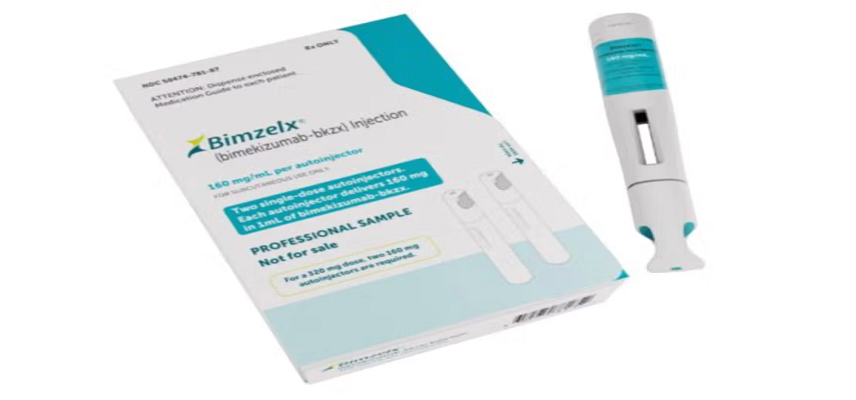
UCB, a global biopharmaceutical company, announced new three-year data from its Phase 3 trials and their open-label extensions investigating BIMZELX® (bimekizumab-bkzx) in adults with psoriatic arthritis (PsA), non-radiographic axial spondyloarthritis (nr-axSpA), and ankylosing spondylitis (AS).
BIMZELX — the first and only therapy that selectively inhibits both interleukin 17A (IL-17A) and interleukin 17F (IL-17F) — continued to demonstrate sustained inflammation control and long-term clinical benefit across disease types. The data were presented at the American College of Rheumatology (ACR) 2025 Annual Meeting in Chicago.
Long-Term Efficacy in Psoriatic Arthritis Maintained Through Three Years
In patients with PsA, improvements achieved at one year were sustained through three years across multiple disease domains, including peripheral arthritis, dactylitis, enthesitis, skin psoriasis, and nail psoriasis, according to GRAPPA recommendations.
“The multi-faceted nature of PsA requires treatment that addresses several domains simultaneously,” said Professor Laura Coates, Nuffield Department of Orthopaedics, Rheumatology and Musculoskeletal Diseases, University of Oxford. “These data demonstrate sustained improvements across key domains, suggesting that bimekizumab may improve long-term inflammation control and prevent structural damage.”
Responses were consistent in both biologic DMARD-naïve and TNF inhibitor–inadequate responder populations. The exposure-adjusted incidence rates per 100 patient-years for uveitis and inflammatory bowel disease (IBD) were low — 0.2 and 0.3 respectively in the BE OPTIMAL study, and 0 and 0.1 in BE COMPLETE.
Sustained Low Disease Activity in Axial Spondyloarthritis
In patients with nr-axSpA and AS, BIMZELX maintained long-term low disease activity as measured by ASDAS (Ankylosing Spondylitis Disease Activity Score).
Half of patients (50%) never lost their ASDAS low disease activity (LDA) status (<2.1) at any visit from Week 16 through Week 164, while over three quarters maintained the response through three years.
“In axSpA, maintaining low disease activity is critical,” said Professor Fabian Proft, Universitätsmedizin Berlin. “The fact that half of patients never lost their LDA response across three years suggests durable, long-term disease control.”
Among patients randomized to BIMZELX 160 mg every four weeks, 43.6% achieved ASDAS LDA at Week 16, and 78.8% maintained this status at Week 164.
Real-World Data Show Rapid and Meaningful Quality of Life Improvements
Interim results from the SPEAK real-world study, conducted across seven European countries, demonstrated rapid improvements in health-related quality of life (HRQoL) in patients with PsA, nr-axSpA, and AS.
In patients with PsA:
- PsAID-12 total score improved by −1.9 at Week 24.
- SF-36 PCS score increased by +4.6, and PGADA score improved by −17.5.
- Benefits were observed as early as Week 2.
In patients with nr-axSpA and AS:
- ASAS HI score improved by −1.6 at Week 24.
- SF-36 PCS improved by +5.7, and PGADA by −1.0, with early benefits seen at Week 2.
“Bimekizumab continues to demonstrate consistent, long-term improvement across PsA and axSpA,” said Donatello Crocetta, Chief Medical Officer at UCB. “These findings reinforce our commitment to advancing care across the full spectrum of rheumatic diseases.”
Study Design Overview
- PsA trials: BE OPTIMAL (bDMARD-naïve) and BE COMPLETE (TNFi-IR) compared BIMZELX 160 mg every four weeks with placebo for 16 weeks, followed by open-label treatment.
- AxSpA trials: BE MOBILE 1 (nr-axSpA) and BE MOBILE 2 (AS) followed a similar design, with all patients receiving BIMZELX after Week 16.
- Real-world study (SPEAK): A 52-week, observational trial in seven European countries evaluating routine clinical outcomes.
Across studies, long-term open-label extensions — BE VITAL and BE MOVING — supported ongoing efficacy and safety through three years.
UCB’s Broader Rheumatology Focus
At ACR 2025, UCB is presenting 16 abstracts on BIMZELX across PsA, nr-axSpA, AS, and psoriasis, alongside seven additional presentations from its broader rheumatology portfolio.
The company stated that these results reflect its ambition to lead in rheumatology, advance RNAi-based and antibody therapies, and provide long-term disease control solutions for patients with complex inflammatory conditions.
