
Introduction
The field of pharmaceutical innovation is rapidly growing and new drug candidates, biotechnology companies, clinical trials, scientific approaches are being added every day. Accessing information is not the challenge for the pharma companies. Early detection of the right signals for making decisions.
A seemingly dull drug prospect could be a valuable competitive asset years later. By the time it gets to late stage clinical development, several companies may already be on this opportunity.
It is for this reason that pipeline intelligence is becoming more and more significant early on. It allows pharmaceutical companies to track drug candidates, clinical programs, sponsors, therapeutic areas, mechanism of actions, biomarkers and competitor activity during the development of their programs. Early visibility can facilitate the business development, licensing, early R&D and portfolio decisions.
What Is Early Pipeline Intelligence?
Early pipeline intelligence is ongoing monitoring and analysis of new drug development initiatives prior to their conversion to marketable opportunities.
It's more than just identifying the drug names and stages of development. A comprehensive approach may involve:
Drug candidates and development stages
- Clinical trial activity
- Sponsors and biotechnology companies
- Therapeutic areas
- Mechanisms of action
- Biomarkers
- Trial locations and investigators
- Competitor pipelines
Activity in the licensing and partnership sector
By combining these signals, pharma companies can gain a deeper understanding of the new innovations and competitive landscape that is unfolding. For instance, the more companies are active on a single target, the more scientific interest in it is increasing.
Why Early Intelligence Matters to Pharma Companies
It can take years to develop a drug and what is decided today will impact a company's pipeline several years in the future. By waiting until a drug reaches strong Phase III results, you could be getting into an opportunity after there is already a lot of interest in the drug from competition and acquisition.
By having pipeline intelligence ahead of time, companies can have more time to explore opportunities and they can:
- Identify emerging competitors
- Find candidates for future drugs
- Keep track of new treatment strategies
- Identify the opportunities for licensing products and services.
- Recognize areas for improvement in their pipelines
- Monitor competitors' R&D agenda
- Analyze companies entering the biotechnology sector
- Plan future investments
The goal is not to predict what medicine will certainly be a hit. Rather, it is important to detect signals in a meaningful way at an early stage to allow scientific and commercial experts to assess their significance.
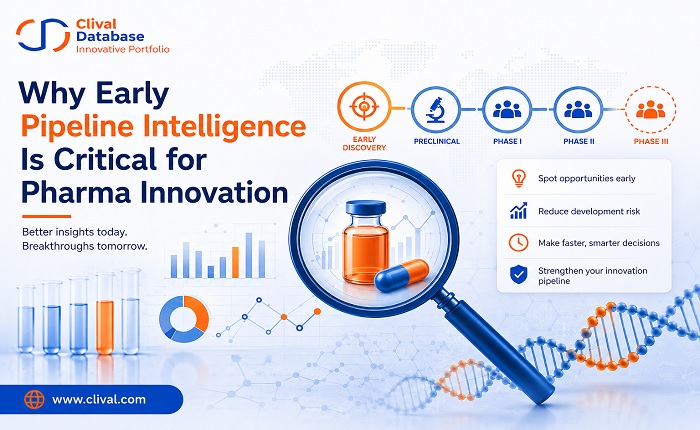
The Drug Development Lifecycle is supported
Pipeline intelligence is useful for the entire lifecycle of a drug.
Discovery and Early Research
As part of the discovery phase, firms track diseases, technologies, mechanisms, and biological targets that are relevant. Competitor and biotech firm activity analysis can reveal new areas of scientific interest, saturated markets, and unmet needs.
Preclinical Development
Preclinical intelligence assists organizations in the identification of candidates advancing to human trials and the comparison of competitive programs based on science and progress. This info can be used to guide in-house development, collaborations and licensing programs.
Phase I and Phase II
Once candidates go into clinical development, companies have access to more strategic information such as trial design, patient populations, endpoints, biomarkers, locations, sponsors and timelines. These factors therefore can be monitored to see how the organisation is positioned in competition and how it is differentiated.
Phase III and Beyond
Research into late-stage programs yields more solid clinical data, but also tends to garner more publicity. Companies following a program from its inception have rich background information on its development, competitive status, and approach.
Pipeline Intelligence's Competitive Insight Is Invaluable
The pipeline of a competitor is a bad sign of more than just the drug candidates the company may be developing. It can suggest the areas of growth and strategies that the company considers as priorities in technology and therapeutic areas.
Companies can analyze:
- Therapeutic priorities: Which diseases and therapeutic areas are receiving investment?
- Technology trends: What mechanisms, biomarkers, modalities or platforms are becoming popular?
- Pipeline gaps: Where are competitors underrepresented?
- Progress of candidates: How quickly are candidates making progress?
- External innovation: Do companies use partnerships and licensing to grow pipelines?
The information gleaned can assist pharma leaders in deciding what's being developed by the competition, and how.
Role of Pharma CRO Firms
Pharma CRO firms play an important role in the process of clinical development, helping with the planning and conducting of trials and management of data.
Monitoring the number of CROs involved can offer further perspective into clinical development activity. Organizations can find out which CROs have been actively engaged in certain therapeutic areas or which sponsors collaborate with certain CROs.
But CRO data is more valuable when put in context with sponsor intelligence, trial intelligence, pipeline intelligence and therapeutic-area intelligence.
Clinical Trial Intelligence Makes Data in the Pipeline More Valuable
Data retrieved from the pipeline indicates a drug. With clinical trial intelligence, there's an explanation as to what is going on with that drug.
A more detailed analysis can provide information about the trial design, patient populations, endpoints, recruitment status, trial locations, sponsors and the timelines of development. This will help companies to compare programs and track their development strategy.
New trials, indication extension, or shift in trial design or into later development stages can be signals of the direction and confidence of a competitor.
How Clinical API Development Supports Pipeline Intelligence
The term clinical API development can be used to describe the software interfaces that enable organisations to connect, share and integrate information from clinical studies.
APIs can plug clinical data into internal systems, dashboards, analytics platforms and intelligence workflows. This can support:
- Automated data retrieval
- Clinical trial monitoring
- Pipeline tracking
- Competitor analysis
- Data integration
- Internal reporting
The real value lies in integrating clinical information, sponsor, pipeline, therapeutic-area and competitive intelligence information.
How AI Is Making Pipeline Intelligence Faster
Organizations in the pharma industry deal with vast amounts of information, such as clinical trial data, scientific research, regulatory activity, and company news. AI can assist in identifying patterns in these data sets and draw attention to data that needs to be investigated by experts.
AI can support:
- Automated monitoring
- Competitor tracking
- Data classification
- Trend identification
- Pipeline comparison
- Opportunity prioritization
But AI should not supplant but enhance expert judgment. Patterns are what technology can help identify, and scientific/commercial expertise is used to determine its meaning for strategy.
Early Pipeline Signals to Licensing Opportunities
With pipeline intelligence, companies can explore potential pipeline licensing opportunities before they're too competitive.
A biotechnology company might have a promising candidate in a therapeutic area with a pipeline gap for a pharmaceutical company, for instance. Early intelligence can be used to find out what the asset is, to track its progress, to assess evidence, and to track programs that are in contention.
This information can help your business development team decide if it should go down the path of a partnership, licensing agreement or acquisition or continue with a development strategy. Early action gives more time to consider opportunities before other possible buyers are in the mix.
How Clival Database Helps Pharma Companies Act Earlier
Clival Database gathers together several types of pharmaceutical intelligence to unravel the whole picture of pharmaceutical activity around the world.
It offers Clinical Trial Intelligence, Drug Pipeline Intelligence, Sponsor Intelligence, Biomarker Intelligence, Mechanism of Action Intelligence, Therapeutic Area Intelligence, Competitive Intelligence, and Investigator & Site Intelligence.
Pharma, biotech, CRO, consultants, investors and business development teams can go beyond pipeline monitoring and, by linking these data points, leverage the data for decision-making. This integrated intelligence can be used for R&D planning, portfolio strategy, competitor benchmarking and licensing decisions.
What is important to succeed early?
Innovation in the pharmaceutical industry is more than just about finding the next big hit. It's also identifying key cues before they're apparent to others.
Early identification of an emerging therapeutic area provides companies with more time to assess the science. Identifying a new biotech in an early stage allows more time for partnerships. Knowing what a competitor is up to at the start will enable a company to adapt its own strategy.
The essence of early pipeline intelligence is to provide pharma companies with more time to consider opportunities, understand the competition, and make informed decisions.