Novartis Reports Positive Phase III Results for Vanrafia in IgA Nephropathy
New Long-Term Data Shows Slower Kidney Function Decline
Novartis has announced final results from its Phase III ALIGN study, showing that Vanrafia (atrasentan) helped slow kidney function decline in adults living with IgA nephropathy (IgAN), a progressive autoimmune kidney disease.
The findings come from 2.5 years of clinical trial data and were published in The Lancet while also being presented at the European Renal Association (ERA) Congress.
According to the study, patients treated with Vanrafia experienced slower deterioration of kidney function compared to those receiving placebo. The treatment also continued to show lasting reductions in protein levels in the urine, an important marker of kidney damage.
Understanding IgA Nephropathy
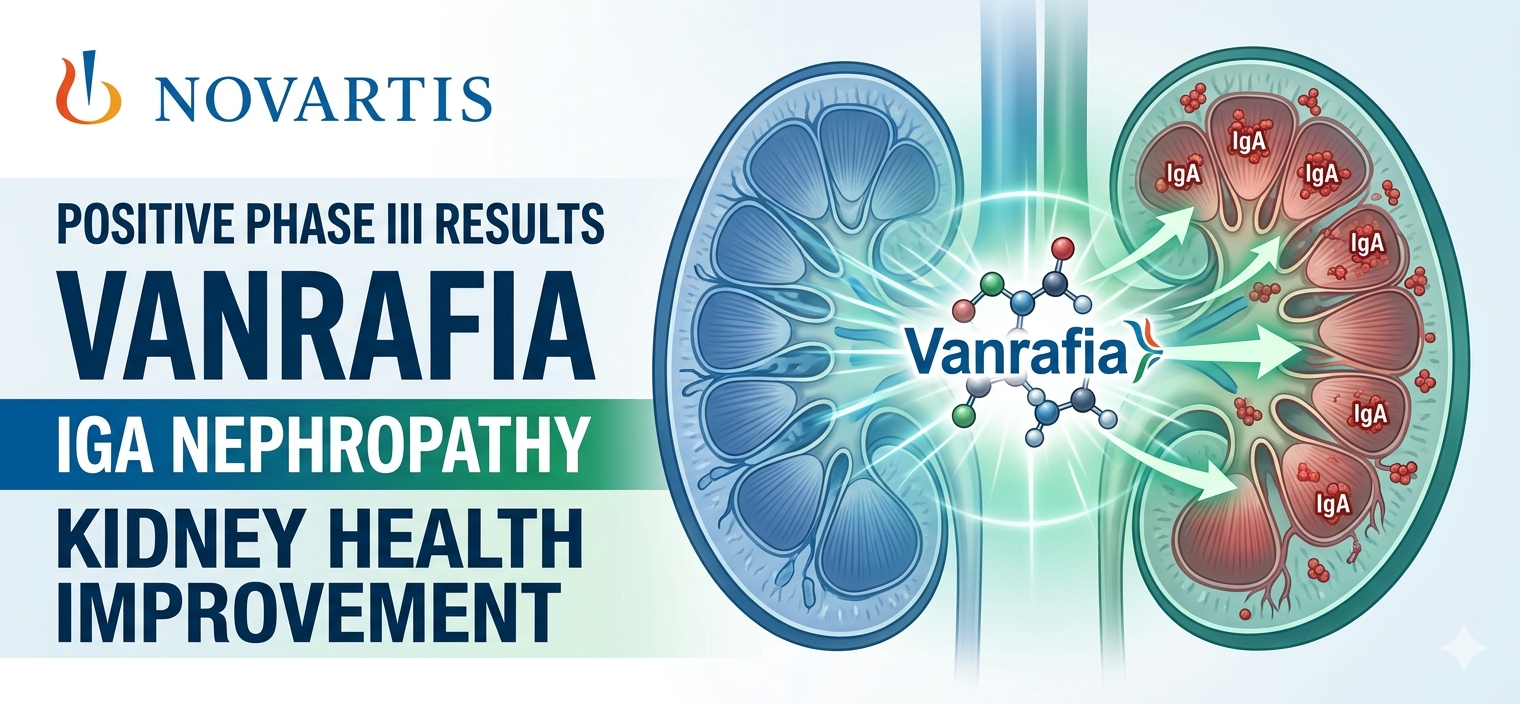
If you are not familiar with IgA nephropathy, it is a chronic autoimmune kidney disease that occurs when a protein called immunoglobulin A (IgA) builds up in the kidneys.
Over time, this buildup causes inflammation and damage to the kidney's filtering units. As the disease progresses, kidney function gradually declines, increasing the risk of kidney failure.
Globally, around 25 people per million are newly diagnosed with IgA nephropathy each year. Because the disease often progresses slowly, many patients may not notice symptoms until significant kidney damage has already occurred.
What the ALIGN Study Found
The Phase III ALIGN study evaluated how well Vanrafia could protect kidney function in patients at risk of progressive kidney disease.
Researchers found that changes in estimated glomerular filtration rate (eGFR), one of the most important measurements of kidney function, consistently favored patients receiving Vanrafia compared with placebo.
The treatment also maintained reductions in proteinuria, which refers to excess protein leaking into the urine. Lower proteinuria levels are generally associated with better long-term kidney outcomes.
Importantly, the benefits remained consistent across multiple kidney function measurements and were also observed in patients who were taking sodium-glucose co-transporter-2 (SGLT2) inhibitors alongside their treatment.
Expert Perspective on the Results
Dr. Richard Lafayette, Professor of Medicine and Director of the Glomerular Disease Center at Stanford University Medical Center, described the findings as an important step forward in understanding the role of Vanrafia in IgA nephropathy treatment.
According to Dr. Lafayette, the results provide strong evidence that Vanrafia can meaningfully slow kidney function decline over a long treatment period. He noted that the data builds on earlier findings that showed reductions in proteinuria and supports the use of highly selective endothelin A receptor antagonists as part of modern IgAN treatment strategies.
Why These Results Matter
For people living with IgA nephropathy, preserving kidney function is one of the most important treatment goals.
While reducing proteinuria is considered an early sign that a therapy may be working, long-term data showing slower kidney function decline provides stronger evidence that a treatment may help delay disease progression.
The ALIGN study offers more than two years of data supporting Vanrafia's potential role in protecting kidney health over time.
This is especially important because many patients with IgAN face a gradual loss of kidney function that can eventually lead to dialysis or kidney transplantation.
Safety Profile Remains Consistent
Novartis reported that the safety findings from the ALIGN study were consistent with previous clinical trials.
The rate of adverse events was similar between the Vanrafia and placebo groups, and researchers did not identify any new safety concerns during the study.
These findings provide additional confidence in the long-term use of the therapy for eligible patients.
Regulatory Progress for Vanrafia
Vanrafia has already achieved important regulatory milestones.
In 2025, the treatment received accelerated approval in both the United States and China for reducing proteinuria in adults with IgA nephropathy.
Following the positive Phase III results, Novartis plans to use the new data package to support applications for traditional regulatory approval in 2026.
If approved, the therapy could further strengthen treatment options available to patients living with this chronic kidney disease.
About the ALIGN Phase III Study
The ALIGN trial was a global, randomized, multicenter, double-blind, placebo-controlled Phase III clinical study designed to evaluate the efficacy and safety of Vanrafia in patients with IgA nephropathy.
The study enrolled 340 patients with biopsy-confirmed IgAN who continued to have significant proteinuria despite receiving optimized renin-angiotensin system (RAS) inhibitor treatment.
Participants were randomly assigned to receive either:
• Vanrafia 0.75 mg once daily
• Placebo once daily
Treatment continued for approximately 132 weeks, allowing researchers to assess both short-term and long-term outcomes.
Novartis Continues Focus on Kidney Disease Innovation
The positive ALIGN results further support Novartis' efforts to develop innovative therapies for chronic kidney diseases.
According to Dr. Ruchira Glaser, Global Head of Cardiovascular, Renal and Metabolic Development at Novartis, the findings reinforce Vanrafia's potential as a foundational treatment option for IgA nephropathy.
The company believes these results strengthen confidence in evidence-based approaches aimed at slowing disease progression and improving long-term outcomes for patients.
Looking Ahead
The final Phase III ALIGN results represent an important milestone for Vanrafia and for the broader IgA nephropathy treatment landscape.
With evidence showing slower kidney function decline, sustained proteinuria reduction, and a favorable safety profile over more than two years, Vanrafia continues to demonstrate promise as a potential long-term treatment option for people living with this progressive autoimmune kidney disease.
As Novartis prepares for traditional regulatory submissions in 2026, patients, healthcare providers, and researchers will be watching closely to see how this therapy may help shape the future management of IgA nephropathy.
Optimize Your trial insights with Clival Database.
Are you exhausted from the uncertainty of trial insights pricing? Clival Database ensures the clarity in the midst of the global scenario for clinical trials to you.Clival Database is one of the best databases that offers an outstanding number of clinical trial data in terms of 50,000+ molecules and from primary regulatory markets as well as new entrants like Indian and Chinese markets.
With Clival, you get accurate positioning of historical sales data, patent database, company profiling, safety & efficacy, and prediction of launch of new innovative molecules helping you to align your research and driving down the cost.
To add value, we further break down our analytics for you so that improving your operational effectiveness; optimizing your clinical trials; and offering you accurate and high-quality data at lowest possible prices becomes possible.
Elevate your trial success rate with the cutting-edge insights from Clival database.
Check it out today and make more informed sourcing decisions! Learn More!