Vascarta Begins Second Phase 1 Study of VAS-101 for Sickle Cell Disease
NIH Clinical Center to Evaluate Topical Curcumin Gel in Patients With Stable Sickle Cell Disease
Vascarta Inc. has started a second proof-of-concept Phase 1 clinical study of VAS-101, also known as Vasceptor®, in people living with sickle cell disease (SCD).
The study is being conducted at the National Institutes of Health (NIH) Clinical Center and will evaluate the safety and tolerability of increasing doses of VAS-101, a topical curcumin gel designed for transdermal delivery.
The study is being led by Dr. Swee Lay Thein, Chief of the Laboratory of Sickle Cell Genetics and Pathophysiology and Chief of the Sickle Cell Branch at the National Heart, Lung, and Blood Institute.
The trial is titled “A Phase 1 Study to Evaluate the Safety and Tolerability of Escalating Doses of VAS-101 in Subjects with Stable Sickle Cell Disease.”
Why VAS-101 Is Being Studied in Sickle Cell Disease
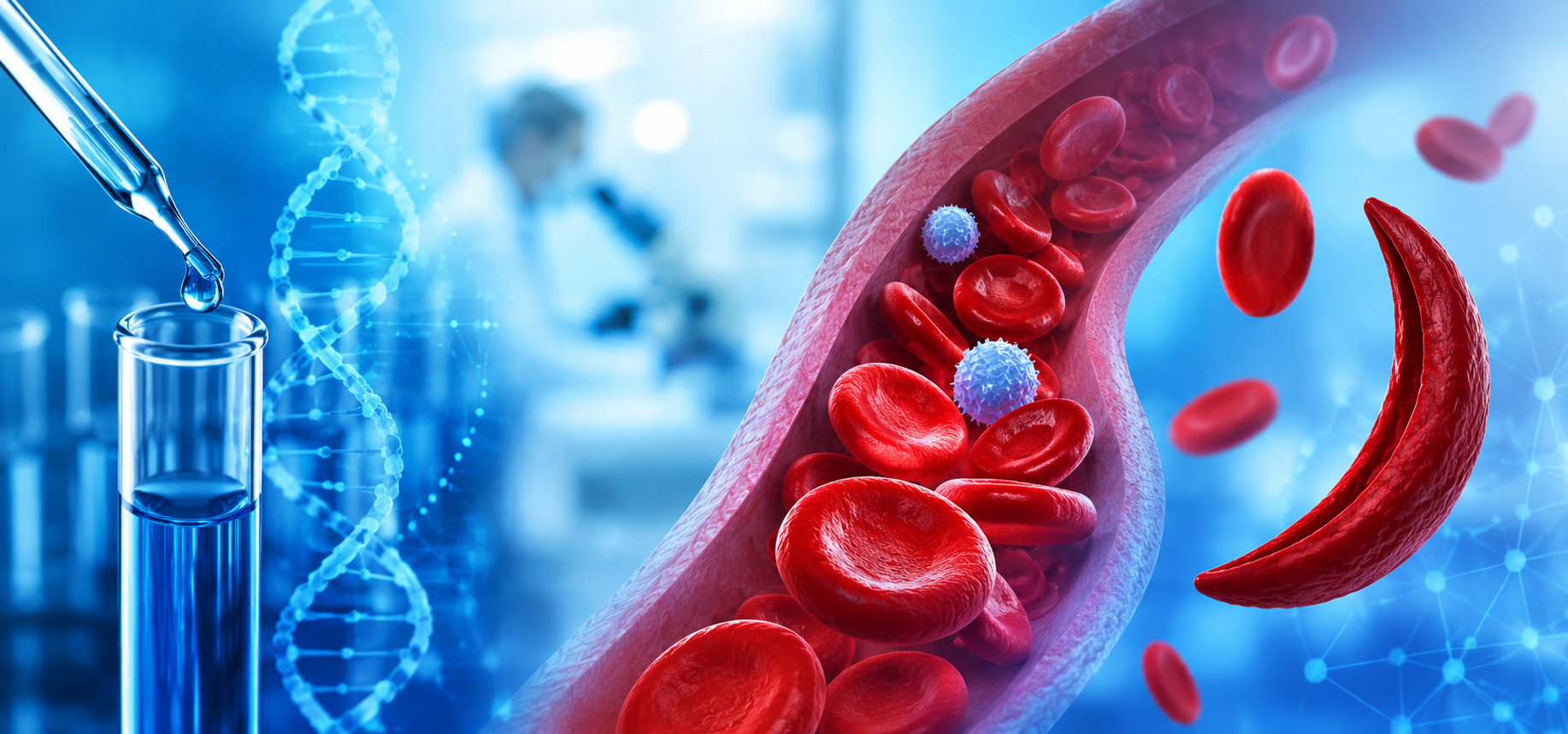
Sickle cell disease is caused by a single mutation in the beta-globin gene. This mutation causes red blood cells to become sickle-shaped under certain conditions.
These abnormal red blood cells can cause problems with blood flow and oxygen delivery. Over time, this can contribute to inflammation, oxidative stress, severe pain and damage to organs.
Pain crises are one of the most difficult complications for people with SCD.
Pain management often depends on supportive care and pain medicines. Some patients need multiple medications, which can create additional treatment challenges and unwanted side effects.
Existing FDA-approved treatments also do not provide adequate pain control for every patient.
This leaves a need for treatment approaches that can be easier to use and potentially address some of the biological processes involved in SCD.
The New Phase 1 Study Will Test Increasing Doses
The NIH study is designed to evaluate how well patients with stable SCD tolerate increasing amounts of VAS-101.
Patients will apply the treatment themselves to the skin during the study.
The dosing schedule will increase gradually over several weeks.
Participants will first receive 0.2 mL of VAS-101 twice a week for two weeks.
The dose will then increase to 0.4 mL twice a week for another two weeks, followed by 0.6 mL twice a week for two weeks.
After the dosing period, patients will enter a follow-up period lasting four weeks.
The entire study is expected to take approximately 14 weeks from screening through follow-up.
Researchers Will Monitor Safety and Biomarkers
Safety and tolerability are the main focus of this Phase 1 study.
Throughout the trial, researchers will monitor participants for adverse events and other signs or symptoms related to treatment.
The study will also examine laboratory biomarkers that may provide information about the potential biological effects of VAS-101.
These measurements will be collected at specific timepoints at the NIH's National Heart, Lung, and Blood Institute.
The biomarker data could help researchers understand whether the treatment is affecting biological processes associated with sickle cell disease.
VAS-101 Uses a Topical Curcumin Formulation
VAS-101 is a patented formulation containing 8.5% curcuminoids.
The product uses Vascarta's Curcugen® formulation together with its Vasporta™ transdermal delivery technology.
The idea is to deliver curcuminoids through the skin rather than relying on oral administration.
This is important because curcumin has traditionally faced a major challenge: the body does not absorb it efficiently when taken orally.
By using a transdermal formulation, Vascarta is attempting to improve the availability of curcuminoids in the body while providing a treatment that can be applied by the patient.
Earlier Phase 1 Results Provided the Basis for Further Study
The new NIH study follows an earlier Phase 1 evaluation of VAS-101 administered sublingually in patients with sickle cell disease.
According to Vascarta, the earlier study showed that VAS-101 was safe and well tolerated in the sublingual cohort.
Researchers also observed improvements in integrated electronic patient-reported outcomes and red blood cell functional biomarkers.
These findings were considered early evidence that the treatment could have both biological and patient-centered benefits.
The earlier results also suggested that higher doses or more frequent administration could potentially produce greater changes in pain measures and laboratory biomarkers.
The new study is intended to explore higher topical doses and provide additional information about the treatment's safety and biological activity.
Researchers Are Looking at Red Blood Cell Health
One area of interest for VAS-101 is red blood cell stability.
Sickle cell disease affects the structure and function of red blood cells, which can contribute to many of the complications associated with the disease.
Vascarta is developing VAS-101 with the goal of targeting several processes involved in SCD, including red blood cell instability, neuro-inflammation and vascular inflammation.
The company believes that addressing these processes could potentially help reduce some of the complications associated with the disease.
The current Phase 1 study will provide additional data needed to understand whether this approach can translate into meaningful clinical benefits.
Sickle Cell Disease Continues to Have Major Treatment Challenges
Sickle cell disease is an inherited genetic disorder that can cause serious complications throughout a person's life.
These complications can include anemia, acute and chronic pain, infections, pneumonia, acute chest syndrome and stroke.
The disease can also affect major organs, including the kidneys, liver and heart.
Vascarta estimates that around 100,000 people in the United States and approximately 45,000 people in European Union countries live with SCD.
The disease can also significantly reduce life expectancy.
For many patients, managing pain and preventing complications requires long-term treatment and regular medical care.
The Potential Role of a Self-Applied Treatment
One of the features of VAS-101 is its topical route of administration.
A treatment that can be self-applied could potentially make long-term management easier for some patients if its effectiveness and safety are established in later studies.
Dr. Swee Lay Thein noted that curcumin has shown promise in laboratory research, but its use has been limited by poor absorption when taken orally.
VAS-101 is designed to address this issue through topical delivery.
The current study will help determine how the treatment performs when administered at increasing doses in people with stable SCD.
Vascarta Is Exploring a Different Treatment Strategy
According to Dr. Joel Friedman, Vascarta's scientific founder and head of its Scientific Advisory Board, the company's approach focuses on several biological processes connected with SCD.
These include red blood cell instability, neuro-inflammation and vascular inflammation.
Dr. Friedman is also the inventor of VAS-101. The therapy is exclusively licensed to Vascarta from Albert Einstein College of Medicine.
The company is studying whether this multi-target approach can help address pain and other complications associated with sickle cell disease.
Blood Transfusions and Pain Management Remain Important Challenges
People with SCD can require extensive medical care throughout their lives.
Blood transfusions may be needed in certain situations, while pain medicines are commonly used to manage acute and chronic pain.
Reducing the need for repeated transfusions and long-term use of potentially harmful pain medications remains an important treatment goal.
VAS-101 is being developed with the potential to provide another option for patients who continue to experience significant symptoms despite existing therapies.
However, the treatment is still in clinical development, and additional studies will be needed to establish its safety and effectiveness.
What Comes Next for VAS-101
The ongoing NIH Phase 1 study will provide additional safety, tolerability and biomarker information for VAS-101.
The study's escalating-dose design will also help researchers understand how patients respond to different amounts of the topical formulation.
If the results continue to support the program, Vascarta may use the findings to guide future clinical development and dose selection.
The company is also exploring transdermal delivery technologies for other conditions involving inflammation and pain.
About Vascarta
Vascarta is a clinical-stage pharmaceutical company focused on developing transdermal delivery technologies for pharmaceutical treatments targeting inflammation and pain.
The company is initially focusing its development efforts on sickle cell disease and osteoarthritis.
VAS-101, or Vasceptor®, is one of its lead development programs and uses a patented curcumin formulation and transdermal delivery technology.
Optimize Your trial insights with Clival Database.
Are you exhausted from the uncertainty of trial insights pricing? Clival Database ensures the clarity in the midst of the global scenario for clinical trials to you.Clival Database is one of the best databases that offers an outstanding number of clinical trial data in terms of 50,000+ molecules and from primary regulatory markets as well as new entrants like Indian and Chinese markets.
With Clival, you get accurate positioning of historical sales data, patent database, company profiling, safety & efficacy, and prediction of launch of new innovative molecules helping you to align your research and driving down the cost.
To add value, we further break down our analytics for you so that improving your operational effectiveness; optimizing your clinical trials; and offering you accurate and high-quality data at lowest possible prices becomes possible.
Elevate your trial success rate with the cutting-edge insights from Clival database.
Check it out today and make more informed sourcing decisions! Learn More!