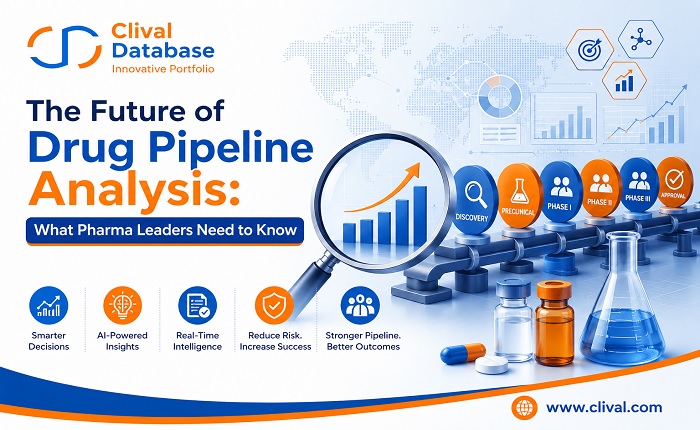
The Future of Drug Pipeline Analysis: What Pharma Leaders Need to Know
Pharmaceutical companies are creating more and more data. New clinical trials start, drug candidates progress through various stages of development, regulatory approvals are made, and collaborations change the competitive landscape all the time, every day. The rate of innovation is impressive both in terms of the opportunities it offers, and in terms of the complexity with which strategic decisions have to be made.
It's no longer a choice for pharmaceutical leaders, it's a necessity to know what is happening all over the world in the field of medicine. That's where the power of Drug Pipeline Analysis has gotten to.
Traditionally pipeline analysis was referred to as competitor monitoring and product tracking. In today's day and age, it has become a full-fledged intelligence tool, aiding organizations to weigh market opportunities, prioritizing investments, looking for licensing opportunities, and charting long-term portfolios.
The era of traditional pipeline reporting and prospects for AI-driven data-driven clinical drug development are transforming into an era of real-time, predictive intelligence.
Why DPA is More Important Than Ever?
The drug lifecycle contains key moments which every pharmaceutical company must navigate. Where should therapy be focused? Who is moving quickest in the race? Where else are the next opportunities for licences? What are the most marketable assets?
More than any public announcement, or annual report, is needed to answer these questions. It demands constant monitoring of drug supply chains around the world.
Drug Pipeline Analysis involves the aggregation, structuring and interpretation of information on the drug candidates as they move through the drug development process. Organizations can use pipeline tracking to see when new therapies are emerging, how they are being tracked by their sponsor, the competitive landscape, and potential market opportunities.
The pharmaceutical executive will find pipeline intelligence to be helpful in:
- Strategic portfolio planning
- Competitive benchmarking
- Business development
- Licensing decisions
- Investment evaluation
- Therapeutic area expansion
In contrast to following the market, companies can instead predict the changes that will come and react accordingly with more confidence.
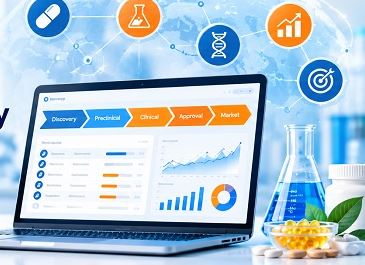
Understanding the Clinical Drug Development Process
All drugs start with an idea but few ever make it to patients. Clinical drug development is a process to assess the safety, efficacy and regulatory approval of a therapy.
It is important to be familiar with each phase and step is a critical indicator of scientific progress, development risk and commercial potential when considering meaningful pipeline analysis.
Drug Discovery
The process starts with finding potential targets in the biology and finding molecules that can affect the disease path. This can take years of laboratory studies before a candidate is selected.
Preclinical Development
Laboratory and animal testing are used to assess safety, toxicity and pharmacological activity. Once that's completed, the developers can request permission for human testing.
Phase I Clinical Trials
Initial human research is mainly on safety, dosage and tolerability. Even though these trials are usually small in size, they are extremely significant in terms of facilitating development.
Phase II Clinical Trials
It is time for scientists to test whether the treatment demonstrates any significant therapeutic effects.
Phase III Clinical Trials
New therapies are compared to ‘standard of care' in large-scale studies to provide evidence needed for regulatory submission.
Regulatory Review
The clinical data is submitted to the regulatory agencies for approval for commercial use.
The pipeline analyst needs to be familiar with the movement through these stages in order to gauge opportunity and risk.
How Drug Pipeline Analysis Is Changing
Pharmaceutical companies have witnessed great change in the past decade.
There are greater numbers of investigational medicines, therapeutic options, and clinical studies taking place in more geographical areas than at any time before.
Therefore, the traditional pipeline tracking methods are no longer adequate.
There are a few significant changes in the way Modern Drug Pipeline Analysis is developed.
From Static Reports to Real-Time Intelligence
Pipeline analysis was previously done with the help of periodic reports and manual research.
Access to real-time clinical development information must be available at all times; the goal is to detect any changes as they arise.
This will enable firms to respond quickly to anything that happens from their competitors, in terms of regulations or science.
Collection and interpretation of data.
Just gathering data about the pipeline is not sufficient anymore.
Organizations are increasingly looking for analytical tools that are able to detect patterns, present new opportunities and guide strategic choices.
Rather than the question of "What is in the pipeline?" leaders now ask:
- Which assets have the greatest commercial potential?
- What are the therapeutic areas that might be getting more competitive?
- Which are the companies that are innovating?
- Where are new licenses available for future business?
These questions cannot be solved through standalone data, they need to be solved through integrated intelligence.
Strategic Value of Pipeline Intelligence
Pipeline intelligence plays a role in almost all the key decisions made in pharmaceutical companies.
Competitive Intelligence
Organizations can use competitor pipeline monitoring to gain insight into where competitors are investing, into which therapeutic areas the pipeline is building up and how development strategies are changing.
This allows for better strategic planning and differentiation.
Including Business Development and Licensing
With early visibility of pipelines, licensing teams have the ability to see assets that may be of interest before they become popular.
A company or group that discovers the opportunity early in the process of clinical drug discovery will have more leverage and a lower acquisition price.
Portfolio Strategy
Pipeline analysis can be used to help optimize a portfolio by identifying scientific gaps, emerging technologies and areas with high unmet medical need.
Companies don't just passively follow the performance of markets, but can plan investments according to innovation trends in the future.
Investment Planning
Pipeline intelligence is valuable for investors and corporate strategy teams to assess pipeline company performance, development risk and future commercial potential.
Pipeline analysis can offer a more predictive view of the pipeline than just financial data.
How AI Is Reshaping Drug Pipeline Analysis
AI has emerged as a key technology force behind today's pharmaceutical intelligence.
The use of AI allows organisations to sift through vast amounts of clinical, scientific and competitive data much more efficiently than manual methods.
The pipeline analysis is undergoing a transformation with several applications.
Faster Data Analysis
With its rapid analysis of clinical trial results, regulatory changes, scientific papers, patent filings, and sponsorships, AI comes to the forefront.
Therefore, the job of analysts is simplified in terms of the need to spend less time gathering and more time analyzing this data.
Predictive Intelligence
AI can not just track the present activity, but also forecast development patterns.
This allows organisations to foresee competitor moves and assess potential market opportunities.
This aids organizations to foresee the rival's moves and gauge the potential in the market.
Competitive Monitoring
AI constantly tracks changes in pipelines, therapeutic area growth, sponsors and development milestones.
This helps pharmaceutical executives react better to any changes in the competitive environment.
Better decision-making
All of these sources of intelligence can be combined by the use of AI, thus helping organizations to prioritize their assets, seek license opportunities and improve portfolio management.
Decision-makers do not need to piece together information from various resources, but have a complete picture of the global innovation landscape.
How Clival Database Supports Smarter Pipeline Intelligence
When the pharmaceutical development process is more data-driven, there is more than just pipeline data to be accessed—there is actionable intelligence.
The Clival Database unifies several intelligence sources on a single platform to help pharmaceutical companies, biotechnology companies, CROs, consultants, investors and business development teams.
These include:
- Drug Pipeline Intelligence
- Clinical Trial Intelligence
- Sponsor Intelligence
- Biomarker Intelligence
- Mechanism of Action Intelligence
- Therapeutic Area Intelligence
- Competitive Intelligence
- Investigator & Site Intelligence
Such capabilities enable organizations to monitor their pipelines, compete in the marketplace, identify therapy trends, and capitalize on opportunities throughout the clinical drug development process.
Rather than managing multiple sources of data, decision makers can manage their data as one unit, which makes it easier for them to make decisions faster.
Conclusion
The Drug Pipeline Analysis future is much more than just the tracking of drug candidates.
It is now a strategic intelligence tool which can help in every aspect of pharmaceutical decision making, from clinical drug development through to competitive benchmarking to licensing, portfolio management and investment strategy.
With AI's data analysis and predictive powers growing, pharmaceutical leaders will need to rely on integrated intelligence platforms to tackle an ever-changing landscape of innovation.
The synergistic use of full pipeline intelligence together with the strategic analysis of this data will give organizations an advantage for the coming years.
Frequently Asked Questions
Optimize Your trial insights with Clival Database.
Are you exhausted from the uncertainty of trial insights pricing? Clival Database ensures the clarity in the midst of the global scenario for clinical trials to you.Clival Database is one of the best databases that offers an outstanding number of clinical trial data in terms of 50,000+ molecules and from primary regulatory markets as well as new entrants like Indian and Chinese markets.
Elevate your trial success rate with the cutting-edge insights from Clival database.
Check it out today and make more informed sourcing decisions! Learn More!