
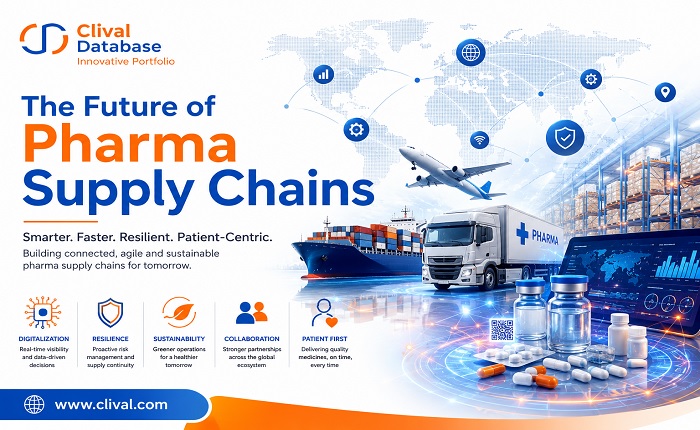
Pharmaceuticals have one of the world's most complicated supply chains. An individual medicine can rely on various supplies, manufacturing units, regulatory clearance and shipping networks, in various countries. Disruptions, no matter how small, can pose major problems, including clinical trial delays, production delays, and availability to patients of therapies.
The pharmaceutical industry has been under pressure for the past few years due to the supply chain disruption, shortage of APIs, geopolitical uncertainties, and varying demand trends. Such problems have brought to light an essential truth, one that is now evident: “Business as usual” is no longer working in the supply chain.
Organizations are seeking to go beyond the traditional forecasting models and historical data these days. They are increasingly turning to artificial intelligence (AI) and real-time API intelligence to enhance visibility, anticipate risks and make quick decisions.
Efficiency in manufacturing is just one aspect of future pharmaceutical supply chains. It will be defined by its capacity to integrate clinical development activity, API demand, supplier intelligence and predictive analytics into one strategy.
The Need for Evolution of Pharma Supply Chains
Pharmaceutical supply chains have been built around stability and planning for the long-term in the past. Forecasts were frequently made of what sales were likely to be based on past experience, and the demands of suppliers were more or less constant.
In the current pharmaceutical landscape, however, things are fast changing.
This change is being brought about by a number of reasons:
- A gradual increase in the complexity of drug development
- A growing dependence on sources outside the country.Growth towards overseas suppliers.
- A growing demand for specialty medicines.An increasing demand for specialty medicines.
- Due to high costs and limited availability, there is a need to expand biologics and precision therapies.
- This includes shifts in regulations at global and foreign markets.
- Unusual events that impact production and transportation
Maintaining a timely accurate prediction of such changes is often difficult using traditional forecasting techniques. When an issue with inventory comes to light, the effects can be affecting manufacturing operations or clinical programs.
This is where AI and real-time intelligence are proving to be invaluable assets for pharmaceutical companies.
Apis Play a Crucial Role in Drug Development
Every Drug product is made up of Active Pharmaceutical Ingredients (APIs). Reliable API supply is essential throughout the product lifecycle, for any company, whether they're working on a small molecule therapy, biologic or specialty medicine.
Let's look at the stages of pharmaceutical development and see how important APIs are.
Discovery and Preclinical Development
The API requirements are small during initial research. It is, however, still necessary to obtain adequate amounts to undertake laboratory research and preclinical trials.
Phase I Clinical Trials
Once a drug candidate has moved into human testing, more API is needed. The manufacturing process should be well controlled for consistency and quality.
Phase II Clinical Trials
More patients means more API's are needed. Companies start to consider long-term manufacturing strategies and supplier relations at this point.
Phase III Clinical Trials
They are building lots of demand in the later stages of development. Increased production volume as organisations start preparing for potential commercialisation.
Commercial Launch
After a drug is approved, the performance of the supply chain is crucial. Availability of APIs can have a direct impact on product supply and revenue generation should it be disrupted.
Knowing these transitions helps pharmaceutical companies to plan more effectively for future manufacturing needs.
How AI Is Transforming Pharmaceutical Supply Chains
Drug makers are evolving from reactive to predictive business with the assistance of artificial intelligence.
AI systems can proactively detect risks rather than just reacting to disruptions when they happen.
Smarter Demand Forecasting
Demand forecasting is one of the most beneficial uses of AI.
Historical sales data is a key component of traditional forecasting. AI models can, however, process a number of variables at once, such as:
- Clinical trial activity
- Market trends
- Regulatory events
- Disease prevalence
- Competitive developments
This will provide more accurate demands forecasting and assist organisations in planning for future demands.
Provide Risk Early Detection
AI can track suppliers' performance, production capabilities, and the supply chain and market trends in real time.
If an organisation is at risk of disruption, they are warned in advance of the potential disruption, thus enabling them to take corrective measures in advance of shortages occurring.
Manufacturing Optimization
AI can also be used to optimize manufacturing processes, detect inefficiencies, and minimize waste, which can be another potential application.
This is especially crucial for complex pharmaceutical products which need special procedures for manufacture and quality control.
Inventory Management
A challenging task in Pharmaceutical operations is maintaining the proper level of inventories.
Predictive inventory systems, powered by AI, can more accurately forecast future demand, preventing shortages and excesses.
Understand the importance of Real-Time API Intelligence.Learn why Real-Time API Intelligence matters.
AI offers predictive power but requires the right kind of data to be readily available.
Real-time API intelligence is necessary for this purpose. Real-time API intelligence provides insight into the factors that could have a direct effect on pharmaceutical supply chains, including:
- Supplier activity
- Manufacturing capacity
- Production disruptions
- Regulatory developments
- Geographic risks
- Market demand signals
But it is not an outdated report or periodic evaluation that gives organizations insight into changing supply conditions, it is a continuous stream of intelligence.
This enables decisions to be made more quickly and better risk management.
With so many products vying for attention, real-time intelligence can make a significant difference for pharmaceuticals companies.
Connecting Clinical Development and Supply Chain Planning
The close relationship between clinical development and the supply chain strategy is one of the biggest trends that will impact the future of pharmaceutical operations.
Traditionally, clinical development and supply chain functioned as separate teams. These functions are becoming more and more linked nowadays.
An API clinical trial program produces valuable information regarding the future manufacturing demand.
Usually, when a company launches a new clinical trial, adds new patients, or moves a candidate through phases of development, API requirements get higher.
By monitoring:
- Clinical trial initiations
- Enrollment growth
- Sponsor activity
- Pipeline progression
- Regulatory milestones
Organizations can anticipate future supply needs well before a market demand arises.
This will provide opportunities to obtain manufacturing capability, build a better supplier base, and mitigate supply chain risk.
Clinical intelligence is becoming an important differentiator for the biggest pharmaceutical companies, and so is the integration of clinical intelligence with supply chain intelligence.
The Future of Pharma Supply Chains
Future pharmaceutical supply chains will be much smarter, connected, and predictive than current chains.
There are several capabilities which are expected to become standard:
Predictive Supply Planning
AI models will be constantly analyzing clinical, commercial and manufacturing data to predict future demand.
Real-Time Visibility
Organizations will have immediate access to supplier performance, inventory, production capacity and logistics activity.
Automated Risk Monitoring
Advanced analytics will detect potential disruptions in advance of operations being affected.
Integrated Decision-Making
Shared intelligence platforms will play a larger role for clinical development, manufacturing, procurement and business strategy teams.
Increased Supply Chain Resilience
AI and real-time intelligence will enable companies to be better prepared to act when uncertainty prevails and to ensure continuity of supply.
The outcome will be more proactive, flexible and resilient supply chains to facilitate increasingly complex pharmaceutical portfolios.
Clival Database to Enable Smarter Pharmaceutical Decisions
The more pharmaceutical development is data-driven, the more visibility a company needs to the development environment.
Clival Database empowers pharmaceutical companies, biotechnology companies, CROs, consultants, investors and business development teams to gain access to intelligence to help them make strategic decisions.
The platform provides:
- Clinical Trial Intelligence
- Drug Pipeline Intelligence
- Sponsor Intelligence
- Biomarker Intelligence
- Categorize the mechanism of action for a drug
- Competitive Intelligence
These intelligence features provide organizations with insights into the evolution of development activity by therapeutic area, sponsor and clinical program.
This visibility can be beneficial for supply chain leaders to gain insights into future API demand, manufacturing needs, and market opportunities.
Development intelligence can be used alongside operations planning to inform organizations' decision making and increase the long term resilience of their supply chains.
Conclusion
Data, intelligence and predictive decision-making will be essential for the future of pharmaceutical supply chains.
With the industry growing in complexity, organizations cannot just depend on the traditional methods of forecasting in history. AI plus real-time API intelligence is opening up new possibilities for increased visibility, predictions and operations optimization.
Just as significant is the increasing association of the different stages of pharmaceutical development with the pharmaceutical supply chain planning. Strong indicators of future manufacturing requirements and API demand are the clinical development activities.
The organisations that effectively put these three together, clinical intelligence, pipeline intelligence and supply chain intelligence, will be better equipped to manage risk, drive innovation and to stay competitive in years to come.