Gan & Lee Reports Positive Clinical Results for Diabetes and Obesity Drug Candidates
Company Announces Progress in Phase 3 Studies of Insulin Ludefen and Bofanglutide
Gan & Lee Pharmaceuticals has announced positive clinical results for two of its key pipeline products, Insulin Ludefen and bofanglutide injection. The latest findings come from late-stage studies focused on type 2 diabetes and obesity, two of the fastest-growing health challenges worldwide.
The company reported that its Phase 3 SUPER-3 study for Insulin Ludefen successfully met its primary endpoint, while the Phase 3 GRADUAL-1 study of bofanglutide injection also achieved its main efficacy goals in adults with overweight or obesity.
SUPER-3 Study Shows Strong Results for Once-Weekly Insulin Ludefen
Insulin Ludefen is an investigational ultra-long-acting basal insulin designed for once-weekly administration. The therapy is being developed as a more convenient alternative to daily insulin injections for people living with type 2 diabetes.
The Phase 3 SUPER-3 trial was conducted across 80 medical centers in China and enrolled 596 adults with type 2 diabetes. Participants had previously been treated with basal-bolus insulin, premixed insulin analogs, or dual insulin analog therapies.
The study compared once-weekly Insulin Ludefen with once-daily insulin glargine U100, both used alongside insulin aspart and, where appropriate, additional non-insulin diabetes medications.
Primary Endpoint Successfully Achieved
After 26 weeks of treatment, Insulin Ludefen demonstrated superior blood sugar control compared with insulin glargine U100.
Patients receiving the once-weekly therapy achieved a reduction in HbA1c of 1.58%, compared with a 1.41% reduction in the daily insulin glargine group. The estimated treatment difference of 0.17% was statistically significant.
HbA1c is considered the gold-standard measurement for evaluating long-term blood glucose control, reflecting average blood sugar levels over approximately two to three months.
Improved Glycemic Control With Lower Risk of Severe Hypoglycemia
The study also showed higher rates of safe glycemic target achievement among patients receiving Insulin Ludefen.
More participants in the once-weekly treatment group achieved HbA1c targets below 7.0% or 6.5% without experiencing clinically significant or severe hypoglycemia during the final 12 weeks of treatment.
From a safety perspective, no severe level 3 hypoglycemic events were reported in the Insulin Ludefen group. In comparison, three severe hypoglycemic events occurred among patients receiving insulin glargine U100.
Researchers noted that the SUPER-3 trial enrolled a particularly complex patient population. Many participants had longer disease duration, more advanced diabetes, and a greater daily injection burden than patients enrolled in earlier studies.
Expanding Evidence for the SUPER Clinical Program
The SUPER-3 results add to a growing body of evidence supporting Insulin Ludefen across different stages of type 2 diabetes treatment.
Previous studies within the SUPER clinical program have also reported positive outcomes.
SUPER-1 Study
The SUPER-1 trial enrolled 588 insulin-naïve adults with type 2 diabetes and compared once-weekly Insulin Ludefen with once-daily insulin glargine U100.
Results showed superior HbA1c reduction with the once-weekly therapy after 26 weeks of treatment.
SUPER-2 Study
The SUPER-2 study enrolled 631 adults who had previously been treated with basal insulin.
Researchers compared Insulin Ludefen with insulin degludec and found that the once-weekly treatment achieved superior HbA1c reduction.
Gan & Lee noted that detailed results from the SUPER-3 study will be presented at future scientific meetings and published in peer-reviewed journals.
Bofanglutide Phase 3 Obesity Study Meets Primary Endpoint
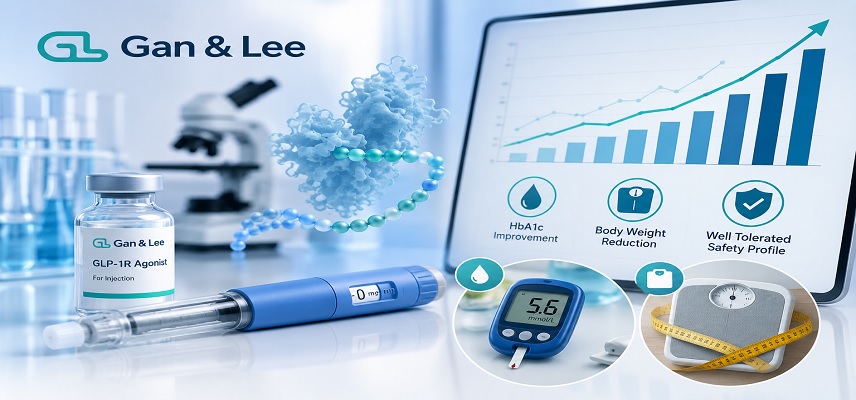
Gan & Lee also reported positive results from the Phase 3 GRADUAL-1 study evaluating bofanglutide injection in adults with overweight or obesity.
The study enrolled 640 participants across China and assessed the efficacy and safety of bofanglutide administered once every two weeks at doses of 24 mg and 48 mg.
Participants entered the study with an average body weight of 93.71 kilograms and an average body mass index of 33.28 kg/m².
Significant Weight Loss Achieved After 52 Weeks
After one year of treatment, patients receiving bofanglutide experienced substantial weight reduction.
Participants receiving the 24 mg dose achieved an average weight loss of 15.12%, while those receiving the 48 mg dose achieved an average reduction of 18.54%.
In comparison, participants receiving placebo experienced an average weight reduction of only 1.11%.
The study also showed that:
- 91.8% of patients receiving 24 mg achieved at least 5% weight loss
- 98.1% of patients receiving 48 mg achieved at least 5% weight loss
These findings demonstrate the strong weight-management potential of the therapy.
Improvements Observed in Metabolic Health Markers
Beyond weight reduction, bofanglutide produced improvements across several important cardiovascular and metabolic indicators.
Researchers reported positive changes in:
- Waist circumference
- Blood pressure
- Triglyceride levels
- Serum uric acid levels
The safety profile was generally consistent with other GLP-1 receptor agonists currently used for obesity management.
The most commonly reported side effects were gastrointestinal in nature, including nausea, vomiting, and diarrhea. These events were generally mild to moderate and temporary, with no unexpected safety concerns identified.
U.S. Phase 2 Study Also Delivers Positive Results
Gan & Lee also announced positive results from a Phase 2 clinical study conducted in the United States.
The trial enrolled 326 participants with overweight or obesity who had not achieved adequate weight control through lifestyle modifications.
The study compared several doses of bofanglutide with placebo and included tirzepatide as an active comparator.
After 36 weeks of treatment, participants without type 2 diabetes receiving the 48 mg dose of bofanglutide achieved an average weight loss of 15.18%.
The tirzepatide group achieved an average weight reduction of 16.93%.
Researchers noted that participants receiving bofanglutide continued losing weight throughout the study, with no clear weight-loss plateau observed.
The treatment also improved blood pressure, waist circumference, and serum uric acid levels while maintaining a safety profile consistent with previous studies.
Additional Clinical Studies Continue
Gan & Lee is continuing to advance both development programs.
The company is currently conducting the SUPER-8 study, which directly compares Insulin Ludefen with insulin icodec.
Additional studies under the GRADUAL clinical development program for bofanglutide are also ongoing as the company continues to evaluate the therapy across broader patient populations.
Detailed data from these studies are expected to be presented at future scientific conferences and published in international medical journals.
Optimize Your trial insights with Clival Database.
Are you exhausted from the uncertainty of trial insights pricing? Clival Database ensures the clarity in the midst of the global scenario for clinical trials to you.Clival Database is one of the best databases that offers an outstanding number of clinical trial data in terms of 50,000+ molecules and from primary regulatory markets as well as new entrants like Indian and Chinese markets.
With Clival, you get accurate positioning of historical sales data, patent database, company profiling, safety & efficacy, and prediction of launch of new innovative molecules helping you to align your research and driving down the cost.
To add value, we further break down our analytics for you so that improving your operational effectiveness; optimizing your clinical trials; and offering you accurate and high-quality data at lowest possible prices becomes possible.
Elevate your trial success rate with the cutting-edge insights from Clival database.
Check it out today and make more informed sourcing decisions! Learn More!