
Mirum and Incyte Report Positive Phase 2 Results for Zilurgisertib in Fibrodysplasia Ossificans Progressiva
New Data Highlights Strong Disease Control in Patients with FOP
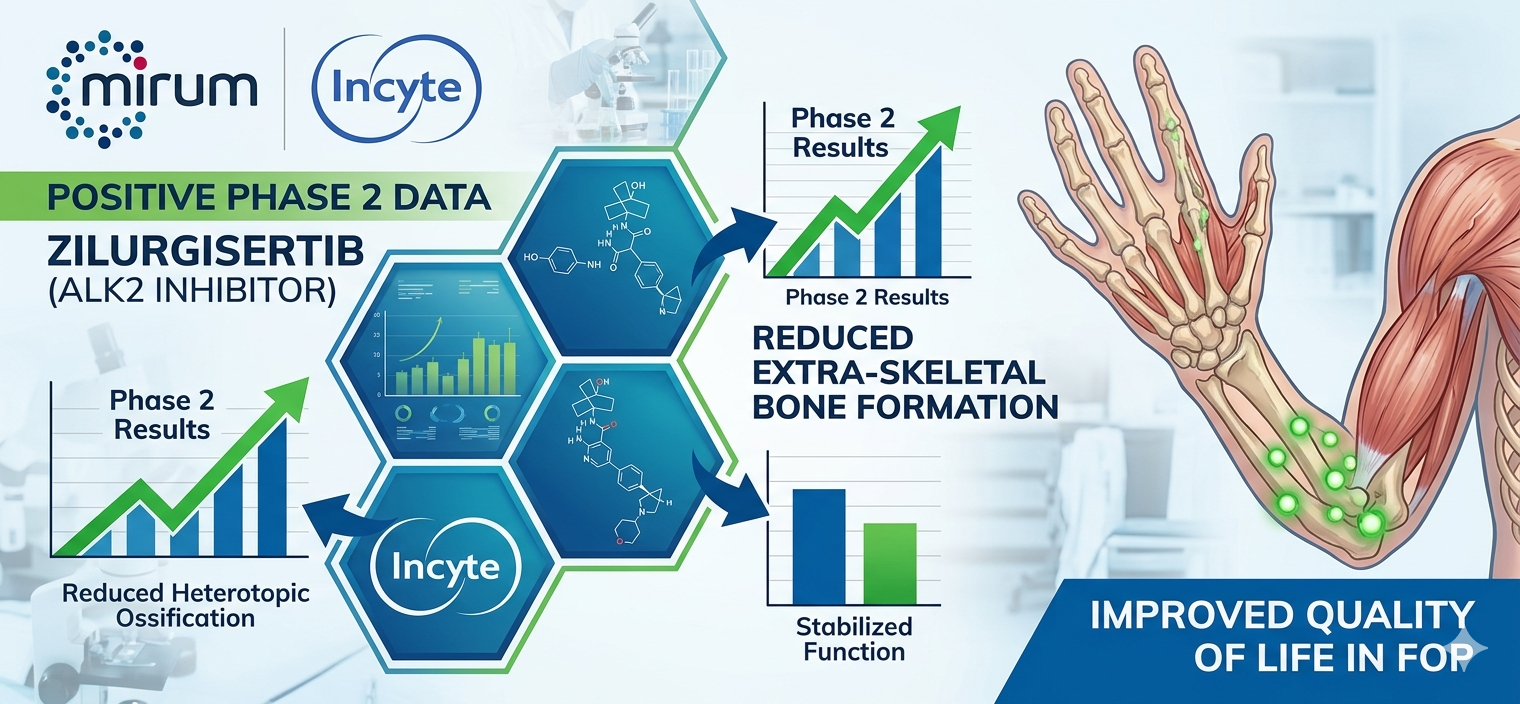
Mirum Pharmaceuticals and Incyte have announced positive pivotal Phase 2 results from Cohort 1 of the PROGRESS study evaluating zilurgisertib, an investigational oral treatment for fibrodysplasia ossificans progressiva (FOP). The findings were presented during a late-breaking session at ENDO 2026, the annual meeting of the Endocrine Society.
The study showed that zilurgisertib delivered consistent benefits across multiple measures of disease activity and maintained those effects through 48 weeks of treatment. Researchers also reported that no new heterotopic ossification (HO) lesions were observed during the open-label extension period among patients who continued treatment or those who switched from placebo to zilurgisertib.
According to Incyte, the latest findings add to the growing clinical evidence supporting the potential of zilurgisertib as a treatment option for people living with FOP.
Understanding the PROGRESS Phase 2 Study
The PROGRESS study is a global, randomized, double-blind, placebo-controlled Phase 2 trial designed to evaluate the safety and effectiveness of zilurgisertib in patients with FOP.
Cohort 1 enrolled 63 adolescents and adults aged 12 years and older. Participants were randomly assigned to receive either zilurgisertib 100 mg once daily or placebo during a 24-week treatment period. After completing the placebo-controlled phase, patients entered an open-label extension in which all participants received active treatment.
The study population had a mean age of approximately 21 years and showed evidence of recent disease activity before enrollment.
Significant Reduction in New Bone Formation
One of the main goals of the study was to measure the development of new heterotopic ossification lesions. These abnormal bone growths form in muscles, tendons, and other soft tissues and are a hallmark of FOP.
Results at Week 24 showed that patients receiving zilurgisertib experienced a major reduction in new lesion development compared with those receiving placebo.
Only one patient in the zilurgisertib group developed a new HO lesion, compared with five patients in the placebo group. This represented an 81% reduction in the number of patients developing new lesions.
Researchers also reported a 99.9% reduction in the total volume of newly formed HO lesions among patients receiving zilurgisertib compared with placebo.
Existing Bone Lesions Also Showed Improvement
Beyond preventing new bone growth, zilurgisertib also demonstrated an effect on existing lesions.
Patients receiving the investigational therapy experienced a reduction in total HO lesion volume, while placebo-treated patients showed an increase in lesion volume during the same period.
These findings suggest that the treatment may help control both ongoing disease progression and existing disease burden.
Benefits Continued Through Week 48
The positive effects observed during the placebo-controlled phase continued during the open-label extension period.
Among patients who received zilurgisertib from the beginning of the study, no new HO lesions were detected through Week 48.
Similarly, patients who initially received placebo and switched to zilurgisertib after Week 24 also showed no new HO lesions by Week 48.
Researchers further reported continued reductions in total lesion volume in both groups during the extension phase.
Lower Flare Activity Observed
FOP flare-ups are painful episodes that often trigger new bone formation and worsen disease progression.
The study found lower flare activity among patients treated with zilurgisertib compared with placebo during the first 24 weeks.
Patients receiving zilurgisertib experienced fewer annualized flare events, and low flare activity was maintained throughout the extension period.
These results indicate that the therapy may help reduce disease activity while limiting the risk of future complications.
Safety Profile Remains Favorable
Zilurgisertib was generally well tolerated throughout the study.
Most treatment-related side effects were reported as mild to moderate in severity. No patients discontinued treatment or required dose reductions because of adverse events.
Serious adverse events and severe side effects occurred at low rates in both treatment groups.
The most commonly reported adverse events among patients receiving zilurgisertib included:
• FOP flare-up or FOP-related pain
• Headache
• Upper respiratory tract infection
• Joint pain
• Nosebleeds
• Nausea
Overall, the safety findings were consistent with previous studies and did not reveal any unexpected concerns.
FDA Review of Zilurgisertib Underway
The positive Phase 2 data arrive as zilurgisertib continues through the regulatory review process in the United States.
The U.S. Food and Drug Administration has accepted the New Drug Application for zilurgisertib for the treatment of FOP in patients aged 12 years and older. The agency has also granted Priority Review status.
The FDA has assigned a Prescription Drug User Fee Act (PDUFA) target action date of September 26, 2026.
If approved, zilurgisertib could become an important new treatment option for people living with this ultra-rare genetic disorder.
About Zilurgisertib
Zilurgisertib is an investigational oral small-molecule inhibitor that targets activin receptor-like kinase 2 (ALK2).
The treatment is designed to block abnormal ALK2 activity, which is responsible for triggering inappropriate bone formation in patients with FOP.
By inhibiting this pathway, zilurgisertib aims to prevent the development of heterotopic ossification and slow disease progression.
Mirum Pharmaceuticals obtained worldwide development and commercialization rights to the therapy through a licensing agreement with Incyte.
What Is Fibrodysplasia Ossificans Progressiva?
Fibrodysplasia ossificans progressiva is an ultra-rare genetic disorder that causes muscles, ligaments, tendons, and other soft tissues to gradually transform into bone.
The disease is progressive and severely disabling, often limiting mobility and daily activities over time.
FOP affects approximately 300 people in the United States and around 900 individuals worldwide. Symptoms usually appear during early childhood, and there are currently very limited treatment options available for patients.
Because the disease leads to permanent and irreversible bone formation, therapies that can prevent new lesions and reduce disease activity remain a major unmet medical need.
Additional PROGRESS Study Cohorts Underway
While Cohort 1 focused on patients aged 12 years and older, the PROGRESS program is continuing to evaluate zilurgisertib in younger patients.
Additional study cohorts are currently assessing the therapy in children aged 6 to less than 12 years and in children aged 2 to less than 12 years.
Researchers will continue monitoring long-term safety and efficacy outcomes as development of the treatment advances.

Optimize Your trial insights with Clival Database.
Are you exhausted from the uncertainty of trial insights pricing? Clival Database ensures the clarity in the midst of the global scenario for clinical trials to you.Clival Database is one of the best databases that offers an outstanding number of clinical trial data in terms of 50,000+ molecules and from primary regulatory markets as well as new entrants like Indian and Chinese markets.
With Clival, you get accurate positioning of historical sales data, patent database, company profiling, safety & efficacy, and prediction of launch of new innovative molecules helping you to align your research and driving down the cost.
To add value, we further break down our analytics for you so that improving your operational effectiveness; optimizing your clinical trials; and offering you accurate and high-quality data at lowest possible prices becomes possible.
Elevate your trial success rate with the cutting-edge insights from Clival database.
Check it out today and make more informed sourcing decisions! Learn More!